
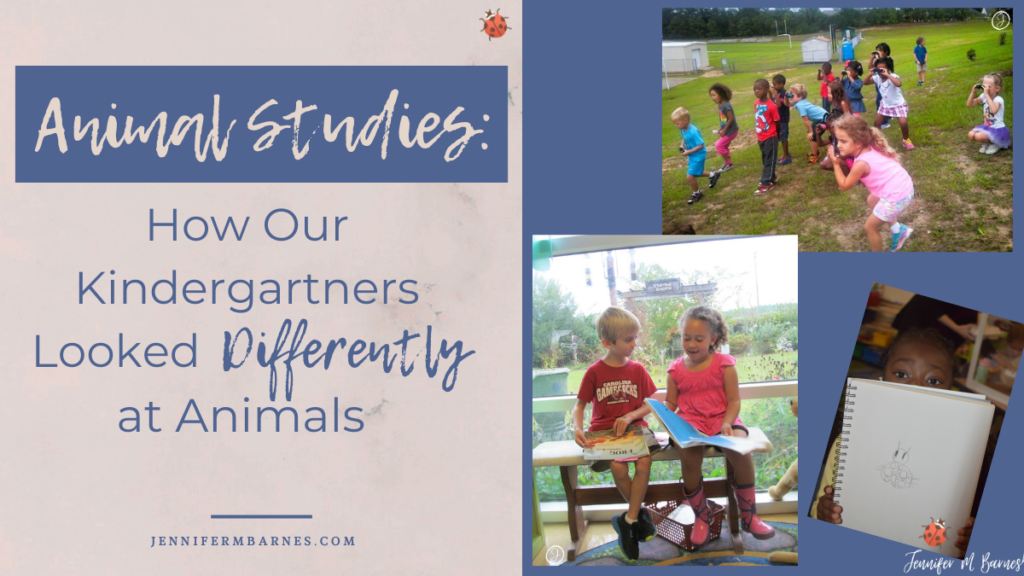
Animal Studies are some of the most powerful things our kindergartners did. But, in our inquiry-based classroom, studying animals looked differently than many other places.
Animal Observations
Learning to look at animals became one of our greatest joys in kindergarten and where we spent much time. We interacted with animal studies in authentic ways:
- Collecting the insects, frogs, and lizards that visited our garden temporarily to observe them—before releasing them back in the wild.
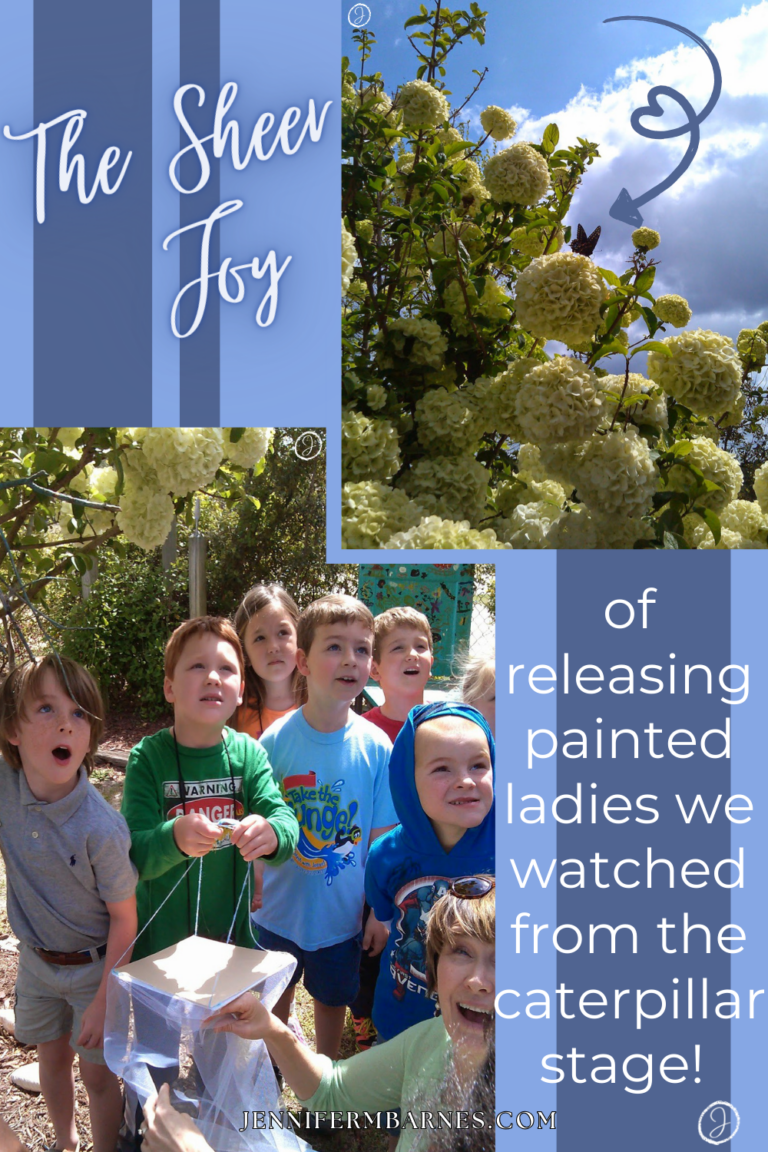
- Purchasing specimen kits from Insect Lore to watch entire life cycles of butterflies, ants, and ladybugs. One of my favorite memories was seeing a multitude of praying mantises emerge from their egg sac and children gently releasing them into our garden habitat. They were remarkably teeny!
- Viewing children’s pets who “visited” our classroom in their cages. In fact, we loved to place the pets in the middle of our carpet. Then, we circled around the outside of the circle with our sketch pads to capture them on paper.
- Watching live cameras of animals (ranging from official zoo broadcasts to individuals’ nest cams.)
- Visiting the zoo, of course.
Watching animals live on cameras
Live cameras transformed many of my students’ beliefs during animal studies. As technology has changed, viewing opportunities abound. As a teacher, I kept a running list of our favorite places to visit. Some were:
- Our local zoo. (How fun to get to know an animal well through web cams and then have the opportunity of seeing them live!)
- Nest cams. (I first learned of these incredible, close-up looks at the lives of birds when we embarked on an eagle study. My students avidly watched owls, hummingbirds, and eagles.)
- The Monterey Bay Aquarium live cams. During my last years as a teacher, these cameras were some of the best. We could view whole habitats focusing on the kelp forest, aviary, open sea, and Monterey Bay itself. We watched sea otters, sharks, jellyfish, and penguins. I peeked in this site recently and discovered a spider crab cam, too.
- The Smithsonian National Zoo. Who doesn’t want to see a giant panda, cheetah cub, lion, or elephant up close? One of our favorites was the naked mole-rat cams in their tunnels. We practically squealed as we watched them scoot through tunnels and walk right on top of other naked mole-rats.
Cautions about Live cams
- You just never know what animals will do! Because of dead fish dinners lying at the edge of the nest and aggressive behaviors, I stationed myself close by the computer to change the screen whenever needed.
- Since California’s time zone runs three hours behind us, we couldn’t visit the Monterey Bay cameras first thing in the mornings. They were still dark. (Another thought-provoking lesson for kids.) We’d have to visit those cameras later in the day to actually see what was going on.
- Whenever I planned an animal data analysis, my students needed multiple animals to choose from. Each child would select an animal and follow it as it moved through the habitat. So, I needed several websites with active colonies. There’s nothing like getting kindergartners all set for animal studies and pulling up a habitat with nothing there! (Worst-case scenario: I pulled up zoo videos on YouTube.)
Animal Data Analysis
Years ago, one of my most influential role models, Dr. Heidi Mills, shared an article on elementary teachers who created animal data analysis experiences with their students. With Heidi’s encouragement and support, I knew I wanted to try such a compelling engagement. (If I only remembered the name of the article or writer, I would share it.)
For an animal data analysis, my goal was for my kindergartners to live and work as scientists. Learning how to analyze animal behaviors and communicate about their observations sounds like a lofty goal for five-year-olds.
But before the children were expected to view and analyze behaviors, I knew we needed to start small. We would simply watch animals, laugh at their antics, and talk about what we noticed.
Starting Small with Animal Studies
Day after day as I greeted children first thing in the morning, we kept the live camera feed rolling on our Smartboard. When something surprising happened, excited viewers alerted us. We “oohed and ahhed” over darting prairie dogs, diving penguins, and flamingoes balancing on one leg.
As children remarked, “Penguins are all so silly,” I questioned to help them think about their words. Are they really silly—or are they doing something we don’t understand? And are they all doing the same thing?
I challenged each child to look closely and select one animal—and only one—to follow. We watched for 15 seconds and then I called, “Time.” Children would identify one major activity in which their animal was engaged at that second. “Looking up, flapping their wings, walking around, just standing there!” Then, we repeated the engagement.
Although it’s fun to find an unusual animal and talk about their antics, children began realizing that certain common behaviors were more typical. In subsequent days as we read thoughtful nonfiction books and watched informational videos, we heard words describing typical behaviors and often learned new terms. Penguins might preen, toboggan, and huddle. But more than likely, most would waddle or stand around. A lot.
Documenting Our data on Paper
We discussed the importance of putting this information down on paper and keeping records of our animal studies over time. Isn’t that what real scientists do when they study animals for years and years? This goal was a challenging one for our beginning writers.
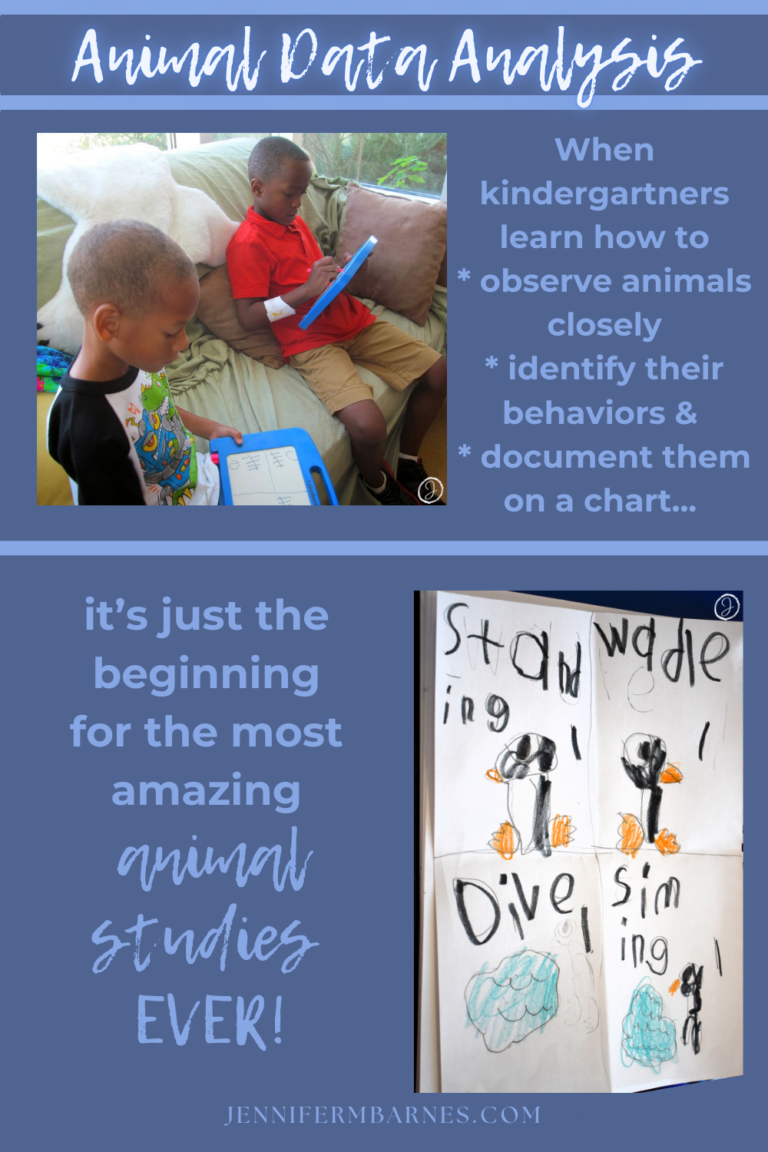
We knew that many of our children’s scientific knowledge was more developed than their writing skills. So, we started practicing data collection using erasable boards. We drew a “t” shape across our entire board, creating four equal quadrants.
We identified behaviors we thought we would see most often. Then we drew tiny symbols at the top of each quadrant representing each. If we were studying penguins, the children might draw a feather (indicating flapping wings or preening) or water (for swimming). Each child selected their own symbols and behaviors. (Not all our charts were the same. I wanted their charts to be based on what they felt was most accurate. We benefitted from this move often during our debriefing conversations as children’s misconceptions were addressed and new learning replaced them.)
A Side Note About Perfection
Just a note that I used erasable boards for children’s first attempts at lots of things. When children become so fixated on making everything perfect, it’s hard to keep the main thing the main thing! By helping them see that we would do this job well and then erase quickly, they were able to learn more—without stressing over the appearance of every little thing. Their chances “to start over” would come very soon. Our light-hearted approach to “mistakes” made the experience much more substantive. (In fact, whenever I made a mistake, I usually called attention to it myself so they could see that no one is perfect.)
Timekeeping During Our Animal Studies
Once the quadrants were ready, we watched the entire colony of penguins a few minutes. Little by little, the children identified their subjects to follow. I set up my board and started the timer. “Ready?”
We watched for 15 seconds. Then I called “Time!” when the timer buzzed. The children thought about the actions best describing their animal behavior. Then, they hunted quickly to find the word and/or symbol to mark their behavior. (And yes, it took some time to process all of this!)
When they were all ready, I called, “Again…” and the children would excitedly search for their animal and watch for the next 15 seconds. “Time.” (It was a dizzying prospect of watching, thinking, tallying, and finding their penguin again. Lots of giggling and squealing, too!)
By the end of our two-minute scientific study, each child would have eight tally marks spread across their chart. They had closely observed the same subject (ideally!) for a set period of time and documented their behaviors as best as they could.
Debriefing To Communicate Our Results
As our little ones watched animals, my assistant and I watched them! Just think of the skills involved in:
- tracking one animal
- coming up with the terms for behaviors they witnessed
- making tally marks on a chart they created themselves
- staying focused to complete the whole experience
- continuing for seven more sets of 15 seconds each
- and then looking to see what they had accomplished.
At the end of our tallying, it felt like a celebration! Children quickly assessed what their chart looked like. And then they always leaned over to the children next to them and questioned, “What did yours do?” They couldn’t wait to compare their results with their friends!
How Our Debriefing Conversations went...
- Individuals talked about what they noticed their animal doing.
- Children wondered how to mark behaviors that weren’t on their chart. What would we do if our animal flapped his wings, but we didn’t have a place to show it?
- We talked about what we thought our animals would do versus what we truly captured them doing. Although they wanted to report tons of diving and racing, most realized the majority of animal time was spent doing more typical, perhaps a bit more “boring”
- We talked about how real scientists have to report the truth, that science depends upon it.
For five-year-olds to understand the difference between “real” animal studies and simply telling funny animal “stories” – phenomenal! And they truly started understanding the important role of objective study that scientists do.
Collecting Data Over Time
At first we collected data on erasable boards to practice our new-found skills. Eventually we moved to documenting our data on paper so we could keep our records and refer back to them. Just like real scientists collaborating on their animal studies.
We used white copy paper, folded them neatly in four sections, invited children to decide their four behaviors to watch for, and set the timers. The children dated their charts and kept their records to review over time.
Animal Observations "in the Wild"
Not surprisingly, the children began noticing behavior of birds in the garden, insects on the playground, and animals at home in very different ways. When we actually visited the zoo several weeks later, our parents, zoo employees, and even zoo visitors were amazed at this group of kindergartners who thoughtfully observed, tallied animal behaviors, and discussed the real things they noticed about their animals.
Using Books in Different Ways
Although the Data Analysis was one of the most transformative ways we became scientists and studied animals, quality nonfiction books have always been a huge part of animal studies in elementary schools.
Accessing appropriate books for young scientists
We maintained an inviting library of quality nonfiction books for students.
- Oversized DK books
- Higher-level animal books with photographs, captions, charts with a glossary and index
- Field guides to identify different types of animals on the go
Clearly, most of these books were above kindergarten reading levels. Any animal lovers know that young scientists can understand much higher content through looking closely at photographs and charts, thinking deeply, and talking to others about animal knowledge.
Science tools were displayed close by:
- magnifying glasses
- measuring tapes
- post it notes
- sketchpads and sketching pencils or colored pencils
- variety of paper.
Children were invited to “take notes” on their new learning. They could slip these post it notes on their selected pages to share with the class during our Class Meetings, Reading Workshop, or Science Talk times.
Using Math As a Tool For Learning
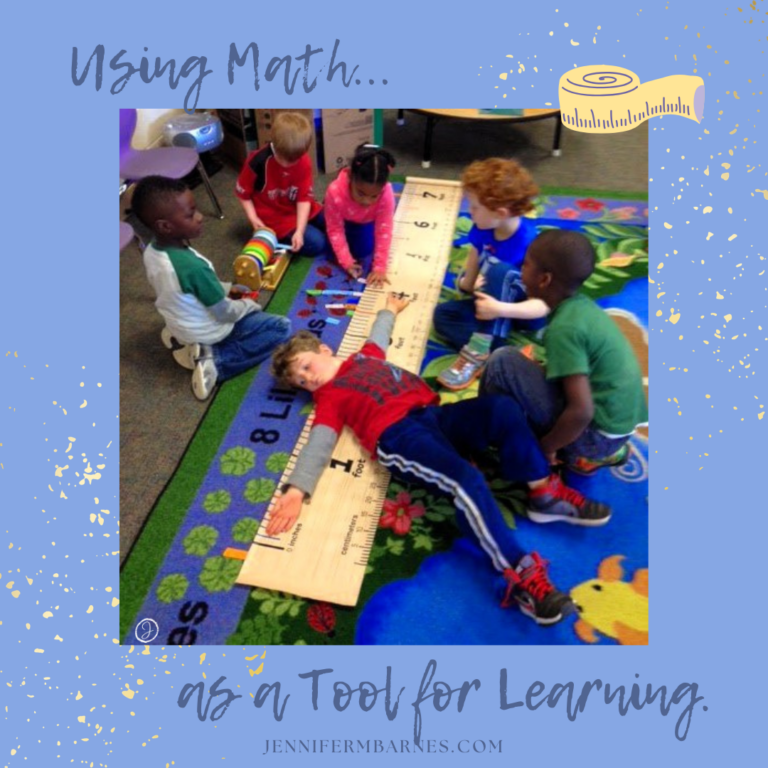
Certain animal books lend themselves to incredible learning during our Animal Studies. Another all-time favorite book to read to kindergartners was Ice Bear: In the Steps of the Polar Bear by Nicola Davies. When we read that male polar bears were ten feet long, we just had to pull out our life-sized measuring tape. The children’s eyes grew huge when they realized ten feet was the length of one full side of our carpet. (Where eight of our friends sat!)
When we read in another book how eagles’ nests can be as large as a car, we were shocked again. After studying a chart showing the wingspans of different birds, we wanted to figure out how we measured up. So, we took turns lying directly on the measuring tape to measure (and exclaim over) each other’s “wingspans,” too!
Immersing Ourselves in Sandra Markle's Books
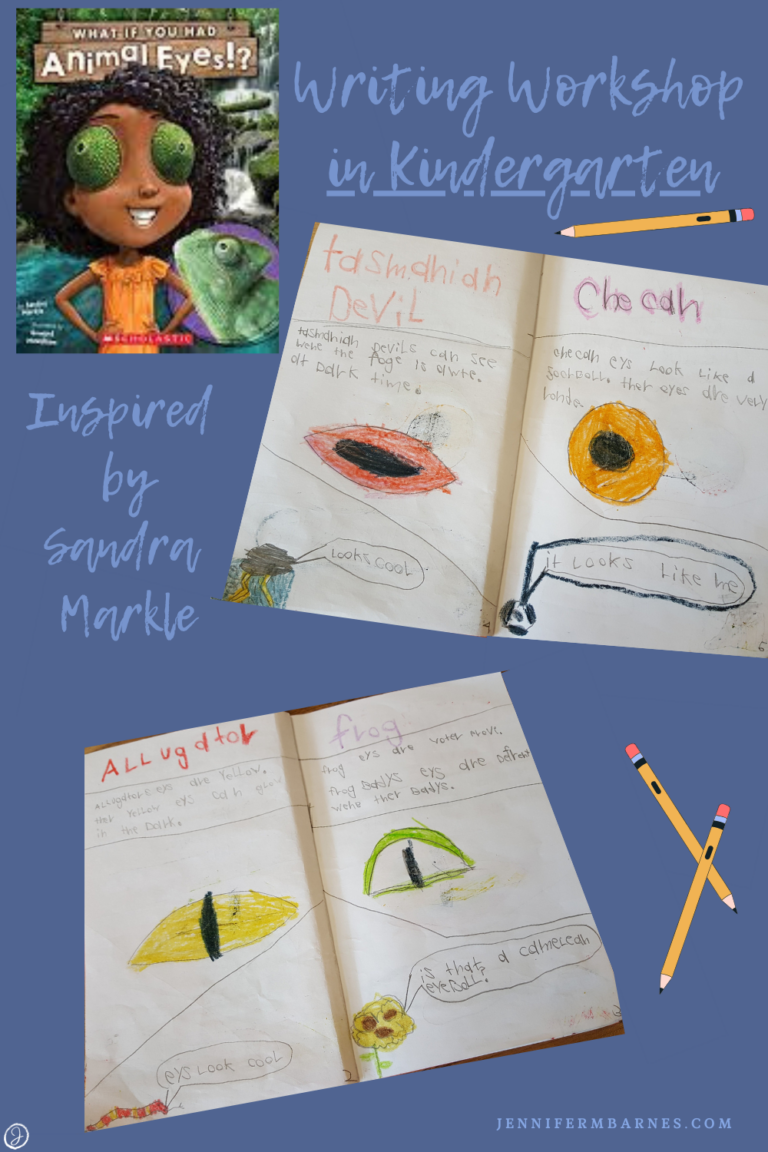
The creator of the “What If You Had…” series, Sandra Markle brought much excitement into our animal studies. She always made us think deeply—whether she was comparing:
- our feet to the feet of aardvarks, mountain goats, or green basilisk lizards
- our teeth to the teeth of narwhals, rattlesnakes, or vampire bats
- or our eyes to the eyes of chameleons, golden eagles, or colossal squids.
Her books became such inspiration for our young book-makers. So, when our young writers decided to compare their noses to the noses of pigs, cats, or platypuses, they had to research to know what content they could include in their books, too. You can imagine how delighted our audiences were when young authors and illustrators shared these pieces! Just check out some of the unforgettable animal books children created during our Writing Workshops!
Celebrating with animal expert projects, our last big project in kindergarten
In a future blog, I’ll share how we culminated our animal studies with animal expert projects.
An Amazing Author who specializes in Animals ... and faith... and history - Jenny L. Cote!
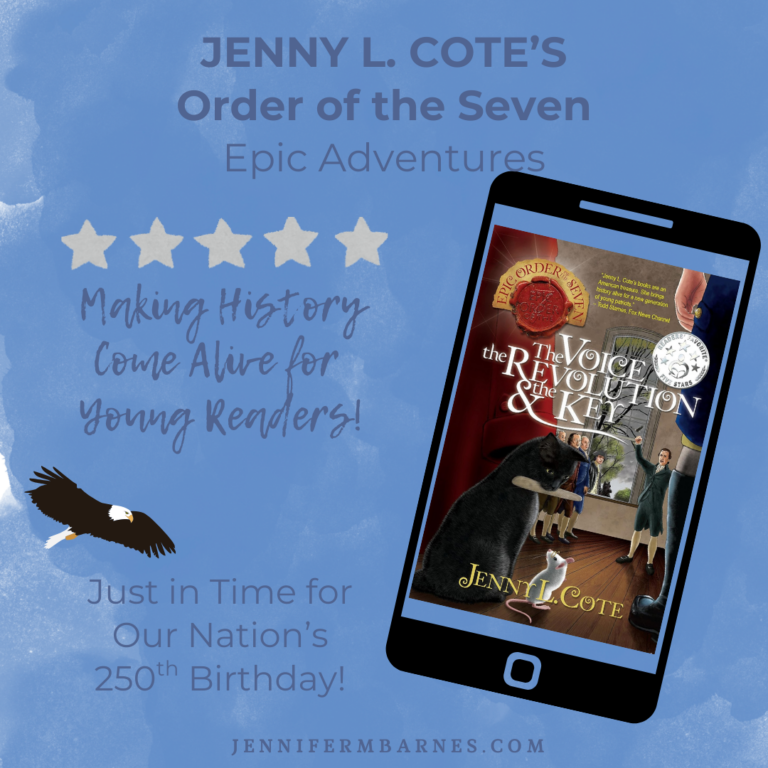
If you’re looking for an unforgettable author who mixes animals, history, and faith in extraordinary ways, you need Jenny L. Cote. She’s the best-selling author of ten historical fantasy fiction books. Her readers’ ages span from 9 to the 90’s.
Jenny’s compelling adventures begin with a dog and a cat. (Since we love digging into the stories behind the story, I was delighted to discover Jenny’s in a VoyageATL article.) There, she describes watching her new Scottish terrier Max play fighting with her black cat, Liz.
She found herself thinking: “When did dogs and cats first get on each other’s nerves? Maybe when they were cooped up on Noah’s Ark for a year. That inspired my first book, The Ark, the Reed, and the Fire Cloud, about the animals heading to Noah’s Ark where they foil a plot by a stowaway who is out to kill Noah and wipe out the human race.”
That thought changed the trajectory of her life! Jenny combines such creativity and imagination with danger and adventure. She eloquently weaves her animal characters into Bible stories with dreamers, prophets, the early church, and more. In the second half of the series, the animals’ lives intersect with historical figures like Paul Revere, Patrick Henry, and eventually C.S. Lewis in remarkable settings. (And so much more!)
Jenny’s deep research into her subjects has taken her all over the world for adventures of her own. She stayed overnight in C.S. Lewis’ room and interviewed his secretary. While sitting in George F. Handel’s composing room, she wrote the Messiah portion of one of her books. Plus, she visited every major historical site throughout the thirteen original colonies, London, and France. Jenny dreams big! And she’ll inspire your readers to dream big, too.
Somehow she combines a desire to grasp more of God’s plan through the centuries with a deeper understanding of our country’s history. And it’s all wrapped up with the same charming characters kids have loved since 2008—when the first book in this series was published.
Head over to her website to be inspired—whatever your age. Although she is busy writing and researching her 11th installment in the series, she created courses for children, podcasts of her books, museum and school visits, and so much more. If you’re hoping to catch her in person, she’ll be at the Museum of the Waxhaws with author Libby McNamee in Waxhaw, North Carolina on Saturday, March 21st, 2026, for “Remember the Ladies.” The event is dedicated to the ladies who shaped our nation through the centuries.